
How to properly harvest and store chilies: Timing is everything

Mild to fiery hot – what's the right level of spiciness?
💡 Did you know that even chili peppers from the same plant can have different levels of spiciness? The fruits at the bottom of the plant are often the hottest 🔥 The spiciness decreases slightly towards the top.
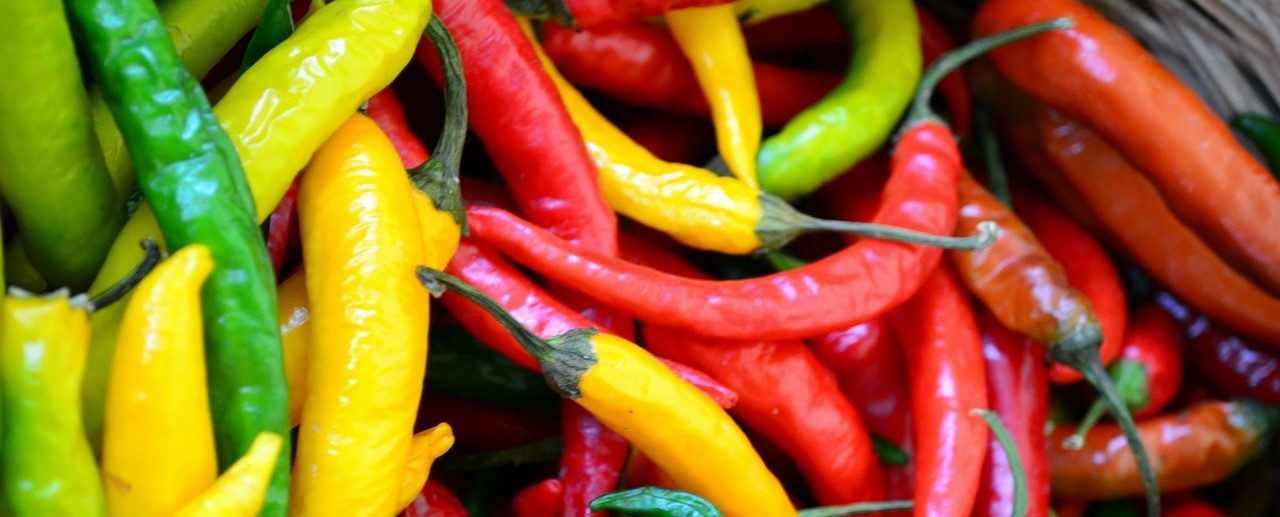
Red or green.
When is the time ripe for the harvest?
With the incredible variety of chili peppers available, it's unfortunately impossible to give a general ripening time. However, it's always worth checking online. Chili lovers worldwide share their experiences with different varieties on numerous websites, making it easy to find the right harvest time for your climate.
The ideal harvest time is primarily determined by the heat level and desired aroma. The consistency of the pods is directly related to these two factors. If you're harvesting green pods like jalapeño, serrano, New Mexican, and poblano, you can easily determine their ripeness by touch : if the chilies are firm but yield slightly to pressure, they're ready to harvest. Unripe pods are still completely filled with tissue and unripe seeds, so they won't give. In this case, give your chilies a little more time to ripen.
Just like with tomatoes, the color of red, yellow, and orange chili peppers also provides a reliable indication of their ripeness. Chili peppers always change color first at the crown of the pod, and the coloring spreads downwards until they are evenly colored. Generally, you should wait about 5 more days before harvesting your chilies.
💡 It's better to harvest a little later than too early: the pods might lose some of their heat, but the ripe, red chilies will gain enormous amounts of sweetness, aroma, and valuable carotene. Unlike tomatoes, chilies do NOT ripen further after harvesting. However, if the first autumn frost is already threatening, green chilies harvested in time will definitely taste better than chilies damaged by frost.

What do the black spots mean?
If you spot small dark discolorations on the chili pepper, don't be alarmed. As long as the skin is still smooth and intact, these chilies are still perfectly edible. The fruits are simply storing anthocyanins in their cell walls to protect themselves from sunburn. It's essentially their way of "applying sunscreen." This is especially common in young plants, for example, if fruit has already formed before they were exposed to strong sunlight, or in the height of summer when the gardener suddenly removes a leaf that was previously providing shade. Sometimes the anthocyanins break down again, but usually the dark coloration remains, so that, for example, ripening red chilies will turn red, but the areas where they were dark will remain darker.
How do I proceed with the harvest?
Step-by-step guide to harvesting chili peppers:
- Pay attention to the specified ripening time and color of the variety.
- Ripe chilies yield slightly to pressure.
- Wait for complete, even coloring.
- Then wait approximately 5 more days until harvest.
- A taste before the entire harvest
- Harvest only using scissors or a knife
- Cut the stem in the middle between the pod and the plant.
- Black spots are normal

Where are chili peppers stored?
Freshly harvested chilies are happiest in the refrigerator. However, be careful NOT to store the pods in a closed container. Condensation will quickly form, leading to mold. If left uncovered in the refrigerator , your chilies will keep for several weeks.
❗ If you want to process your chilies fresh , always make sure to wear gloves when handling hot varieties❗ Hot peppers contain essential oils and fumes that can irritate your eyes and skin .
source : https://gustagarden.com/blogs/ratgeber/chilis-ernten?srsltid=AfmBOorOT-Lh8d6vy4oTxJZ5vlU6DxDhz5KQrqouh1XtjOn8MBswBZ-U
Post a Comment for "How to properly harvest and store chilies: Timing is everything"